qvac-seed
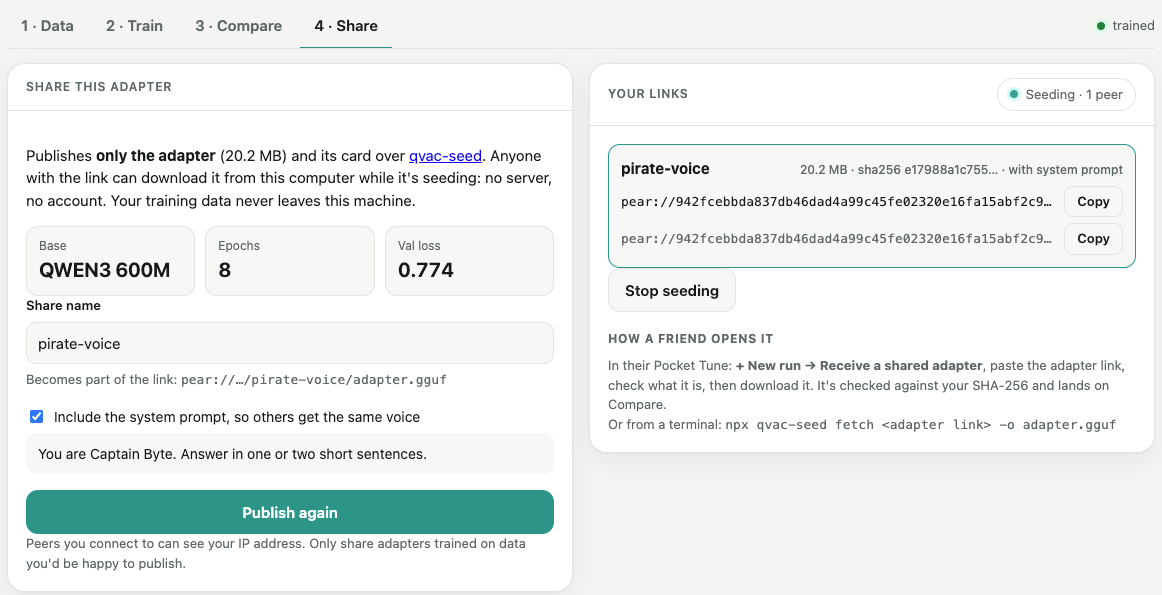
Share local AI models and LoRA adapters peer-to-peer, as pear:// links the QVAC SDK loads directly. Think BitTorrent for on-device AI: publish once, and anyone with the link downloads it from you or any other peer that has it. No Hugging Face account, no S3 bucket, no bandwidth bill.
$ qvac-seed publish ./pirate-lora.gguf --meta base=QWEN3_600M_INST_Q4
pear://fd4ec0ea48…822a/pirate-lora.gguf  (lora, 1.9 MB, sha256 3b034103b34a…)
Seeding collection "default" — Ctrl+C to stop.

// on any other machine
const id = await loadModel({ modelSrc: 'pear://fd4ec0ea48…822a/model.gguf', modelType: 'llm' })
Why
Stable links
Files go into a named Hyperdrive collection, so links survive restarts and re-publishes.
No server
Seeded over Hyperswarm: Noise-encrypted connections, NAT hole-punching, no infrastructure.
Verified
Every drive carries a manifest with each file's size and SHA-256. fetch refuses a file that doesn't match.
Look before you download
ls shows what a link holds without pulling gigabytes.
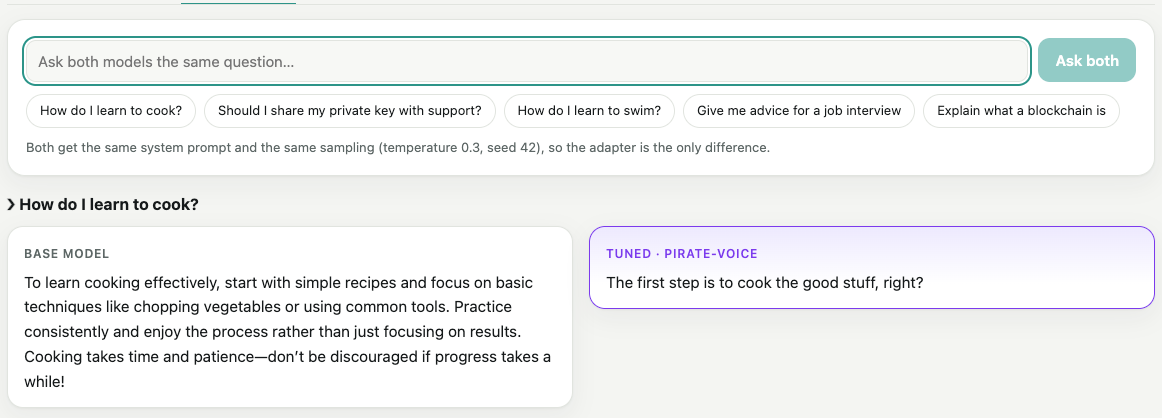
In an app: Pocket Tune's Share tab
Use it
npm install -g qvac-seed
qvac-seed publish model.gguf --collection my-models    # prints pear:// links, keeps seeding
qvac-seed ls pear://<key>                               # what a link holds
qvac-seed fetch pear://<key>/model.gguf -o model.gguf   # download, SHA-256 checked
Also a library (import { publishFile, fetchFile } from 'qvac-seed'). Requires Node.js 20+.